
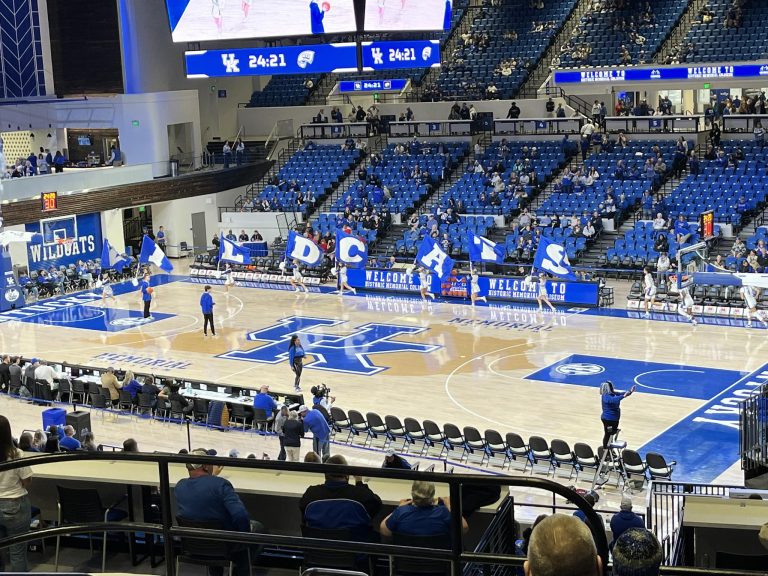
The possibility of the University of Kentucky selling naming rights to the historic Memorial Coliseum has quickly become one of the most talked-about developments surrounding Kentucky athletics. For generations of Wildcats fans, Memorial Coliseum has represented much more than just a sports venue. It has served as a landmark deeply connected to the identity of Kentucky basketball, university tradition, and the broader history of college athletics in Lexington.
Now, reports suggesting that the university is considering a corporate naming-rights agreement have sparked mixed reactions among fans, alumni, and college sports observers. While some see the move as a necessary financial decision in the modern era of college athletics, others worry that it could erase an important piece of Kentucky’s heritage.
Memorial Coliseum has long stood as one of the most recognizable buildings on the Kentucky campus. Opened in 1950, the arena was originally constructed to honor Kentuckians who lost their lives in military service during World War II. Over the decades, the building became home to countless memorable moments in Wildcats athletics and remains a symbolic centerpiece of the university’s sporting culture.
Although the men’s basketball program eventually moved into Rupp Arena, Memorial Coliseum has continued to host athletic events, particularly for women’s basketball, volleyball, gymnastics, and other university programs. The building still carries enormous emotional value for Kentucky supporters who associate it with decades of athletic tradition and campus history.
The idea of selling naming rights reflects the changing financial landscape of college sports. Across the country, universities are increasingly searching for new revenue streams to remain competitive in an era shaped by NIL opportunities, conference expansion, facility upgrades, and growing operational costs. Athletic departments now operate more like professional sports organizations than ever before, and corporate partnerships have become a major part of that reality.
For Kentucky, a naming-rights deal could potentially bring millions of dollars into the athletic department. That money could help support facility renovations, athlete resources, recruiting efforts, and long-term program development. With college athletics becoming more expensive every year, university officials may view the opportunity as a practical business decision rather than simply a branding exercise.
Still, the emotional attachment to Memorial Coliseum makes this situation particularly sensitive. Many fans believe the arena’s name should remain untouched because of its historical significance and original purpose as a memorial. Critics argue that replacing the name with a corporate sponsor could diminish the tribute embedded within the building’s identity.
The debate highlights a growing tension in college sports between preserving tradition and pursuing financial growth. Universities nationwide have faced similar decisions in recent years. Historic stadiums and arenas that once symbolized school pride are increasingly becoming commercial assets in a highly competitive sports marketplace.
Some supporters believe Kentucky can find a compromise solution. Instead of completely removing the Memorial Coliseum name, the university could potentially create a hybrid arrangement that preserves the memorial aspect while incorporating sponsorship branding. Similar strategies have been used by other universities and professional teams attempting to balance financial opportunities with historical preservation.
Others point out that modernization may be unavoidable if Kentucky wants to maintain its status as one of the nation’s elite athletic programs. Facilities, staffing, travel expenses, athlete support systems, and recruiting budgets continue to rise dramatically across college sports. Programs unwilling to evolve financially risk falling behind competitors that aggressively pursue new revenue sources.
The timing of the reports also adds another layer of intrigue. College athletics is currently experiencing one of the most transformative periods in its history. NIL compensation, transfer portal activity, media-rights expansion, and conference realignment have created unprecedented financial pressure on athletic departments. Schools are constantly searching for creative ways to generate additional income while keeping programs competitive nationally.
For Kentucky basketball specifically, expectations remain extraordinarily high every season. Whether it is men’s basketball, women’s basketball, or other athletic programs, the university faces enormous pressure to maintain championship-level standards. Revenue generated from naming-rights agreements could potentially help sustain that level of excellence in the years ahead.
At the same time, many longtime fans fear that too much commercialization could weaken the traditions that make college sports unique. Unlike professional franchises, college programs are often deeply tied to school identity, alumni pride, and local history. Memorial Coliseum represents those emotional connections for many people associated with Kentucky athletics.
As discussions reportedly continue, university officials will likely face significant scrutiny from both supporters and critics. Any final decision could shape public perception of the athletic department for years to come. Fans will undoubtedly watch closely to see whether Kentucky prioritizes financial growth, historical preservation, or some combination of both.
Regardless of the outcome, the conversation surrounding Memorial Coliseum demonstrates how rapidly college sports continue to evolve. What once seemed unthinkable — corporate naming rights attached to historic venues — has become increasingly common in today’s athletic environment.
For Kentucky, the challenge now lies in finding a path that respects tradition while preparing for the future. Whether Memorial Coliseum keeps its historic identity or enters a new commercial era, its place in Wildcats history is already secure.
Leave a Reply