
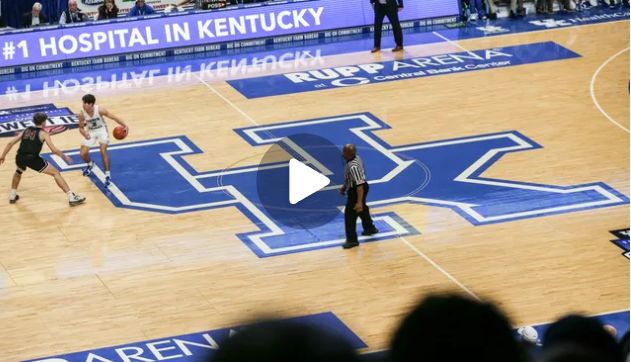
The modern era of college basketball has transformed the transfer portal into one of the most important battlegrounds in the sport. Programs that adapt quickly can rebuild a roster overnight, while those that struggle often find themselves facing uncertainty before the season even begins. Early in the current offseason cycle, few major programs have drawn more scrutiny than Kentucky Wildcats men’s basketball, a team many analysts believe has emerged as one of the biggest early losers in the transfer portal market.
For a program with Kentucky’s history, expectations are always sky-high. The Wildcats are not simply expected to compete in the Southeastern Conference; they are expected to contend nationally every year. Fans in Lexington demand deep NCAA Tournament runs, elite recruiting classes, and rosters loaded with NBA-level talent. That pressure has only intensified during the transfer portal era, where rapid roster changes can immediately shape public perception.
This offseason, however, Kentucky has found itself on the wrong side of the conversation. While rival programs across the country have aggressively added experienced talent, the Wildcats have faced roster instability, missed recruiting opportunities, and increasing concern from fans about the direction of the team.
One of the biggest issues for Kentucky has been roster retention. In today’s college basketball landscape, keeping key contributors has become nearly as important as recruiting new players. Programs that maintain continuity often have a major advantage, especially in March when chemistry and experience matter most. Kentucky, however, has seen significant uncertainty surrounding multiple players, leaving the coaching staff scrambling to rebuild depth.
The departure of impactful contributors through the transfer portal has created gaps across the roster. Even more troubling for supporters is the fact that several of those exits come at a time when SEC rivals appear to be improving rapidly. Teams like Tennessee Volunteers men’s basketball and Louisville Cardinals men’s basketball have generated momentum with aggressive portal additions and strong offseason recruiting efforts, increasing pressure on Kentucky to respond.
The criticism surrounding Kentucky is not necessarily about one individual player leaving. Instead, it reflects a broader concern that the Wildcats are struggling to establish momentum in an increasingly competitive environment. The transfer portal has effectively turned college basketball into a year-round recruiting battle, and programs that hesitate can quickly fall behind.
Head coach Mark Pope entered the job with significant excitement and optimism. His offensive philosophy, energetic personality, and connection to the university immediately energized the fanbase. Many supporters believed Pope could modernize Kentucky basketball while restoring stability to the program after years of inconsistency.
Still, early portal struggles have created challenges for the new coaching staff. Fans expected Kentucky to aggressively pursue experienced guards, versatile wings, and proven scorers capable of competing in the SEC immediately. While the Wildcats remain active in the portal, some major targets have chosen rival schools instead, fueling the perception that Kentucky is losing critical recruiting battles.
The optics of those missed opportunities have been especially damaging because several competing programs are thriving at the same time. Louisville, for example, has generated national attention with a dramatic turnaround under new leadership. Tennessee continues to operate as one of the SEC’s most stable basketball programs. Even schools traditionally viewed below Kentucky in the basketball hierarchy are becoming more aggressive in NIL spending and portal recruiting.
That changing landscape has forced Kentucky fans to confront an uncomfortable reality: the Wildcats no longer possess the overwhelming recruiting advantage they once enjoyed.
NIL opportunities have dramatically reshaped college athletics, and Kentucky is far from the only program adapting to the new system. However, expectations in Lexington are unique. Fans expect Kentucky to lead college basketball, not play catch-up. When rival schools land major portal commitments while Kentucky searches for answers, frustration naturally grows louder.
Despite the criticism, it is important to remember that the transfer portal cycle is far from over. College basketball rosters can change rapidly, and a single commitment can completely alter public perception. Kentucky still possesses major advantages, including national brand recognition, elite facilities, passionate fan support, and one of the most recognizable basketball traditions in America.
The Wildcats also remain capable of attracting high-level talent late in the offseason. Many players still value the opportunity to compete under the bright lights of Rupp Arena while playing for a program with deep NCAA Tournament history. Kentucky’s national visibility alone ensures the program will continue to receive attention from elite prospects and transfers.
Another factor working in Kentucky’s favor is the unpredictability of preseason evaluations. Teams labeled as offseason “winners” do not always succeed once games begin, while programs criticized in May can become championship contenders by March. Chemistry, player development, injuries, and coaching adjustments ultimately determine success more than offseason headlines alone.
Still, perception matters in college basketball, especially at a program like Kentucky. Early offseason narratives often influence recruiting momentum, fan confidence, and national expectations. Right now, the Wildcats are facing significant skepticism because many observers believe other major programs have handled the portal more effectively.
The coming weeks could determine whether that narrative changes. If Kentucky lands several impact players and stabilizes the roster, the current criticism may quickly fade. But if the Wildcats continue missing key portal targets while rivals strengthen their lineups, concerns surrounding the program could intensify even further.
For now, Kentucky finds itself in an unfamiliar position — a blue-blood program searching for answers while competitors celebrate offseason success. The Wildcats still have time to reverse the narrative, but in the fast-moving world of college basketball recruiting, the pressure is already mounting.
At Kentucky, patience rarely lasts long. Fans expect championships, elite talent, and dominance on the national stage. Anything less creates scrutiny, and this offseason has already placed the Wildcats squarely under the spotlight.
Leave a Reply