
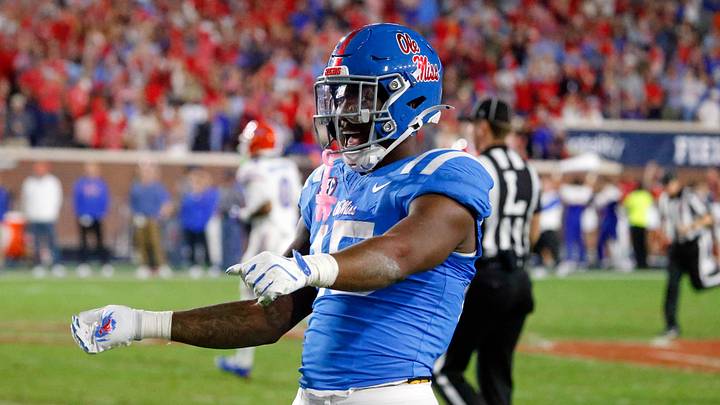
The modern era of college football has transformed roster building into a year-round exercise, and few programs illustrate that better than the Auburn Tigers football heading into the 2026 season. After significant roster turnover and a coaching transition, Auburn turned heavily to the transfer portal to rebuild quickly. Among dozens of new additions, two names have emerged as the most important pieces for the Tigers’ immediate future: quarterback Byrum Brown and edge rusher Womack.
These two transfers don’t just represent talent upgrades—they symbolize Auburn’s blueprint for returning to relevance in a highly competitive SEC landscape.
Byrum Brown: The Offensive Catalyst
When Auburn secured the commitment of Byrum Brown, it was immediately clear that the program had landed its most important transfer of the cycle. The former USF quarterback arrives with both production and familiarity, having followed head coach Alex Golesh to Auburn. That continuity could prove invaluable as the Tigers attempt to stabilize an offense that has struggled in recent years.
Brown’s numbers tell the story of a dynamic dual-threat quarterback. He accounted for over 4,000 total yards and more than 40 touchdowns in his previous season, including over 1,000 yards on the ground. His ability to extend plays, create with his legs, and deliver explosive plays through the air makes him a nightmare for opposing defenses.
But beyond the stats, Brown fills a critical leadership void. Auburn’s quarterback room underwent significant turnover, leaving the team without an established starter. Brown not only steps into that role but is expected to elevate the entire offense. His familiarity with Golesh’s system should accelerate the learning curve for a unit that features several other transfers, particularly from USF.
Still, the transition to SEC competition is no small leap. Brown has shown flashes of brilliance, but week-to-week consistency against elite defenses remains a question. Even so, his ceiling is undeniable. If he adapts quickly, Auburn’s offense could undergo one of the most dramatic turnarounds in the conference.
Womack: The Defensive X-Factor
While Brown headlines the offense, Auburn’s defense may hinge on the emergence of Womack, a highly touted edge rusher with immense potential. A former five-star recruit, Womack’s journey has included stops at LSU and Ole Miss, with flashes of promise but limited sustained production.
In 2025, Womack began to show signs of development, recording 27 tackles, two sacks, and a forced fumble. While those numbers don’t jump off the page, they hint at a player beginning to find his footing. Now at Auburn, he has a chance to finally deliver on his considerable potential.
What makes Womack so important is Auburn’s need to replace production along the defensive front. With key departures, the Tigers are looking for a new disruptive force off the edge. If Womack can become that player, it would significantly elevate a defense that already has a strong foundation.
Defensive coordinator DJ Durkin’s system thrives on pressure and disruption. Womack’s athleticism and versatility make him an ideal fit, capable of impacting both the run and pass game. A breakout season from him could not only transform Auburn’s defense but also boost his own NFL draft prospects.
A Program in Transition
Auburn’s reliance on transfers in 2026 is not accidental—it’s necessary. The program saw more than 30 players depart via the transfer portal, forcing a near-complete roster overhaul. In response, the Tigers brought in nearly 40 new players, creating one of the most aggressive transfer classes in the country.
That approach reflects a broader trend in college football, where immediate impact players are prioritized over long-term development. As one analysis noted, success in 2026 will depend heavily on how well programs “plug immediate holes” with proven talent. Auburn is fully embracing that philosophy.
The transfer class has already earned national recognition, ranking among the top groups in the country. But rankings alone don’t win games. The success of this class will ultimately be judged by how players like Brown and Womack perform on the field.
Supporting Cast Matters
While Brown and Womack are the headline names, they are far from the only impactful transfers. Auburn added a host of offensive weapons, including wide receiver Keshaun Singleton and running back Nykahi Davenport, both of whom bring proven production from USF.
On defense, additions like Cody Sigler and members of the secondary will also play key roles. The sheer volume of newcomers means Auburn will look very different in 2026, with new faces at nearly every position group.
However, the reality is that quarterbacks and pass rushers often define a team’s ceiling. That’s why Brown and Womack stand out above the rest—they play premium positions that directly influence wins and losses.
The Pressure to Deliver
With so much turnover and a new coaching staff, expectations for Auburn in 2026 are both uncertain and intriguing. There is potential for rapid improvement, but also risk if the new pieces fail to gel.
Brown will face immediate pressure to produce, as Auburn’s offensive struggles in recent seasons have been well documented. Meanwhile, Womack must prove he can translate potential into consistent performance.
The margin for error in the SEC is razor-thin. Teams like LSU, Texas A&M, and Ole Miss continue to reload with elite talent, meaning Auburn cannot afford a prolonged adjustment period.
A Defining Season Ahead
Ultimately, the 2026 season will serve as a defining moment for Auburn’s rebuild. The success of the transfer-heavy approach hinges on players like Byrum Brown and Womack delivering on their promise.
If Brown becomes the dynamic leader Auburn hopes for and Womack emerges as a disruptive force on defense, the Tigers could quickly re-enter the conversation as a competitive SEC program. If not, the growing pains of such a massive roster overhaul could be difficult to overcome.
In today’s college football landscape, impact transfers are often the difference between mediocrity and contention. For Auburn, the spotlight shines brightest on two players who carry the weight of expectation—and the potential to reshape the program’s future.
Leave a Reply