
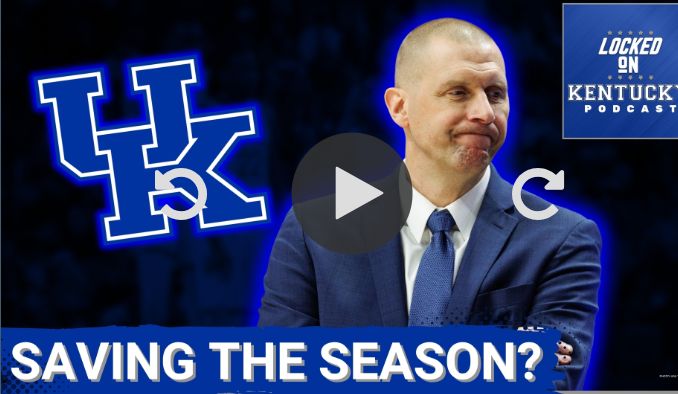
The offseason has been anything but smooth for the Kentucky Wildcats. Between transfer portal departures, recruiting battles, and growing pressure from one of college basketball’s most demanding fan bases, concern has steadily risen around the direction of the program. Expectations in Lexington are always sky-high, and when uncertainty begins to surround the roster, panic is never far behind.
Yet despite the criticism and frustration that have dominated headlines in recent weeks, there may still be a path forward for Mark Pope and the Wildcats. In fact, there are growing signs that Kentucky’s offseason may not be as disastrous as many initially feared. While the roster is still evolving, the foundation of a competitive team appears to be taking shape behind the scenes.
For Pope, this offseason has become an early defining moment in his tenure. Replacing a legendary figure and stepping into one of the most scrutinized jobs in sports was never going to be easy. Every transfer loss has been magnified. Every recruiting miss has sparked debate. And every move has been analyzed by fans desperate to see Kentucky return to national championship contention.
Still, Pope has remained remarkably steady amid the noise.
One of the biggest challenges Kentucky faced entering the offseason was roster uncertainty. The transfer portal changed the landscape of college basketball once again, leaving many programs scrambling to rebuild. Kentucky was not immune to the chaos. Key contributors departed, rumors swirled around several players, and rival fan bases quickly declared the Wildcats losers of the offseason.
But roster construction in modern college basketball is no longer about keeping every player for multiple seasons. It is about adaptability, fit, and timing. Pope appears to understand that reality better than many critics realize.
Instead of chasing headlines alone, Kentucky’s staff has focused on assembling a roster that fits Pope’s system. That approach may not always generate immediate excitement, but it can produce long-term stability. Pope’s offensive philosophy emphasizes spacing, ball movement, perimeter shooting, and versatility. Building a roster capable of executing that style requires more than simply collecting highly ranked talent.
The Wildcats may now be closer to that vision than outsiders think.
Kentucky’s transfer additions bring experience and maturity that recent Wildcats teams occasionally lacked. In recent years, the program often relied heavily on freshmen expected to deliver immediately under intense pressure. While elite recruits remain essential to Kentucky’s identity, Pope seems determined to balance youthful talent with experienced college players who understand how to win.
That balance could prove critical in the ultra-competitive SEC.
The conference continues to evolve into one of the toughest leagues in college basketball. Programs such as Tennessee Volunteers, Auburn Tigers, and Alabama Crimson Tide have raised the standard dramatically in recent seasons. Kentucky can no longer rely solely on tradition and recruiting prestige to dominate the league.
Pope knows the Wildcats must adapt strategically.
Another reason for optimism is the flexibility Kentucky still possesses. Unlike programs locked into incomplete rosters or scholarship limitations, the Wildcats remain active in evaluating additional portal options and late recruiting opportunities. Modern roster building is fluid, and some of the most impactful moves often happen later in the offseason.
That flexibility gives Pope room to fine-tune the roster before the season begins.
Perhaps more importantly, there is growing belief that the current group genuinely fits together. Chemistry is often overlooked during offseason evaluations dominated by rankings and star ratings, but it matters enormously once games begin. Teams filled with talented individuals do not always become successful teams. Pope appears focused on constructing a roster with complementary skill sets rather than overlapping roles.
If Kentucky can establish strong locker-room chemistry early, the narrative surrounding the offseason could change quickly.
Critics have questioned whether Pope can recruit at the level necessary to maintain Kentucky’s national brand. That concern is understandable given the enormous expectations attached to the program. However, recruiting success is no longer measured solely by high school rankings. The portal era rewards coaches who can identify immediate contributors and build cohesive lineups quickly.
Pope’s approach may ultimately prove more sustainable than many realize.
His familiarity with the modern college game also works in Kentucky’s favor. Unlike some coaches still adjusting to the transfer portal era, Pope embraces offensive innovation and roster flexibility. His previous coaching stops demonstrated an ability to maximize spacing and offensive efficiency, two areas Kentucky occasionally struggled with in recent years.
If the Wildcats improve offensively while maintaining defensive intensity, they could become one of the SEC’s most dangerous teams by the middle of the season.
There is also an emotional component driving this team. Kentucky players understand the criticism surrounding the offseason. They hear the doubts. They see the headlines questioning whether the program has lost its edge. In many ways, that pressure could become motivation.
Historically, Kentucky basketball has often responded best when expectations are uncertain.
The fan base itself remains divided. Some supporters believe patience is necessary during Pope’s transition period, while others expect immediate championship-level results. That tension is unlikely to disappear anytime soon. At Kentucky, every season carries enormous stakes, and rebuilding years are rarely accepted as excuses.
Still, it is important to remember how quickly perceptions can change in college basketball.
A strong nonconference performance, a signature SEC victory, or early chemistry between key players could completely reshape the national conversation. Teams labeled offseason “losers” in May often look entirely different by January. The portal era accelerates roster transformation at a pace the sport has never seen before.
For Pope, the challenge is not simply winning games. It is restoring confidence in the direction of the program.
The good news for Kentucky fans is that the roster no longer appears directionless. While questions remain, there is increasing evidence that Pope and his staff have a clear vision for what this team should become. The pieces may not be fully assembled yet, but the structure is beginning to emerge.
That alone represents significant progress after weeks of uncertainty.
No one is claiming Kentucky’s offseason has been perfect. The Wildcats undoubtedly lost talent and faced difficult setbacks. But labeling the entire offseason a failure may ultimately prove premature. There is still time for Pope to reshape the narrative — and perhaps even surprise the critics who already counted Kentucky out.
In a program where expectations never fade, resilience matters as much as talent.
And if Mark Pope’s roster truly is beginning to come together behind the scenes, the Wildcats may still have every opportunity to turn a chaotic offseason into the foundation of a successful new era in Lexington.
Leave a Reply