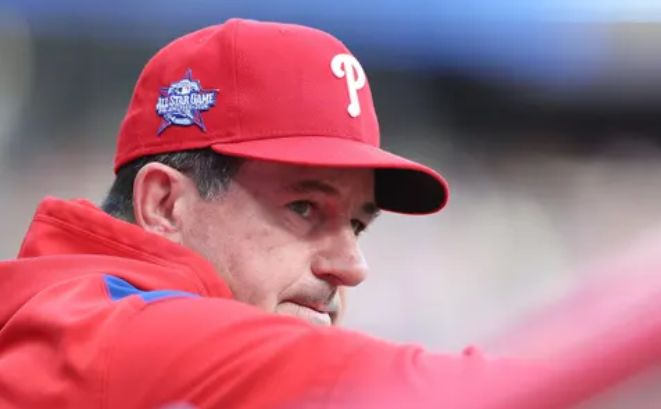
The Philadelphia Phillies are entering a new chapter, and one of the club’s biggest stars, Alec Bohm, is already embracing the change. Following the departure of longtime manager Rob Thomson, Bohm recently opened up about the impact the organization’s new skipper has had on the clubhouse atmosphere, praising what he described as a true “player-first mentality.”
In an emotional and revealing statement, Bohm hinted that the culture surrounding the team may finally be evolving into something players have wanted for years.
“We have never had this level of communication and understanding before,” Bohm said during a recent media appearance. “You can tell he really sees things from a player’s perspective, and that changes everything for us.”
Those comments quickly sparked conversation among Phillies fans and baseball analysts alike. While Thomson guided the team through several competitive seasons and earned respect throughout the league, Bohm’s remarks suggest the franchise may now be entering a more collaborative era under its new leadership.
For many inside the organization, the transition represents more than just a managerial replacement. It signals a potential philosophical shift in how the team operates on a daily basis.
Bohm, who has steadily become one of the emotional leaders of the Phillies clubhouse, emphasized that the new manager has already established stronger relationships with players by encouraging open communication and mutual trust.
“He listens,” Bohm explained. “That’s the biggest thing. Players want to feel heard. We spend every day grinding through the season together, and when your manager understands that side of things, it creates a completely different environment.”
The talented third baseman has experienced both highs and lows during his career in Philadelphia. From early criticism to becoming a fan favorite, Bohm understands the pressure that comes with wearing a Phillies uniform. That experience makes his endorsement of the new manager even more meaningful.
Throughout Thomson’s tenure, the Phillies enjoyed memorable moments, including postseason runs that energized the city and reignited the franchise’s championship aspirations. Thomson was respected for his calm demeanor and steady approach, particularly during difficult stretches of the season. However, baseball is constantly evolving, and teams often seek new voices when trying to maintain momentum.
For Bohm and several other players, the arrival of a manager who prioritizes communication appears to have brought fresh energy into the clubhouse.
Sources close to the team have indicated that offseason meetings between players and coaching staff focused heavily on accountability, chemistry, and mental preparation. The new manager reportedly encouraged players to share honest opinions about training methods, lineup decisions, and clubhouse dynamics — something Bohm implied had not always happened in previous years.
That sense of inclusion may prove critical as the Phillies attempt to remain among the elite teams in Major League Baseball.
The National League continues to grow more competitive each season, with rivals making aggressive roster improvements and investing heavily in player development. For Philadelphia to stay in contention, maintaining strong clubhouse chemistry could become just as important as talent on the field.
Bohm believes the new leadership style could help unlock another level of performance from the roster.
“When players feel comfortable and respected, you naturally play freer,” he said. “You trust the process more. Everybody buys in because they know the manager genuinely cares about the people in that room.”
Those comments have resonated strongly with fans, many of whom have followed Bohm’s personal development since he debuted with the Phillies. Once viewed primarily as a promising young hitter, Bohm has matured into one of the organization’s cornerstone players. His offensive consistency, defensive improvement, and growing leadership presence have made him an essential piece of the team’s long-term plans.
Now, his voice carries considerable weight inside the clubhouse.
Several teammates reportedly share Bohm’s optimism about the managerial transition. Veterans and younger players alike have welcomed the emphasis on communication and collaboration, believing it could strengthen the team’s unity during the long grind of the MLB season.
The Phillies front office also appears confident in the direction the organization is heading. Team executives reportedly prioritized leadership qualities and emotional intelligence during the managerial search process, wanting someone capable of balancing competitive intensity with player relationships.
In modern baseball, that balance has become increasingly valuable.
Today’s players expect transparency, honesty, and a sense of partnership from coaching staffs. Managers who can connect personally with athletes while still maintaining accountability often gain stronger long-term trust from their rosters.
Bohm’s comments suggest the Phillies may have found exactly that type of leader.
Of course, expectations in Philadelphia remain extremely high. Fans are passionate, demanding, and eager to see the franchise compete for another World Series title. Any managerial change will ultimately be judged by wins, losses, and postseason success.
Still, culture matters.
Teams with strong chemistry often perform better under pressure, particularly during difficult stretches of the season. If the Phillies can combine elite talent with improved clubhouse communication, they could emerge as one of the most dangerous teams in baseball once again.
For Bohm personally, the new environment may also help elevate his own game. The former first-round pick continues to refine his approach at the plate while becoming more confident defensively. Entering the upcoming season, he is expected to play a major role in the middle of Philadelphia’s lineup.
His endorsement of the new manager may also reflect a broader sense of optimism throughout the organization.
After years of chasing championship consistency, the Phillies appear determined to evolve rather than remain stagnant. Sometimes, a fresh voice can reignite motivation inside a talented roster.
Bohm certainly believes that possibility exists.
“We’re excited,” he said. “There’s a different energy right now. Everybody feels it. We respect what came before, but this feels like the beginning of something new.”
As the Phillies prepare for the upcoming campaign, all eyes will be on how the team responds to its new leadership. The transition away from Rob Thomson marks the end of one important era, but according to Alec Bohm, the next chapter may already be building stronger foundations for future success.
And if the clubhouse atmosphere continues trending in the direction Bohm described, Philadelphia’s pursuit of another championship could become even more dangerous for the rest of Major League Baseball.