
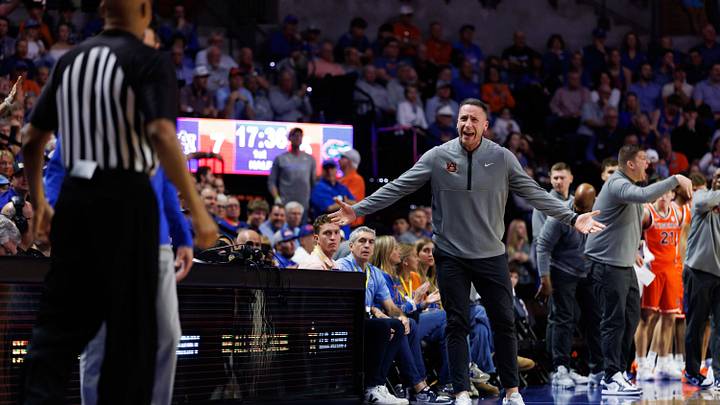
There was a time not long ago when Auburn Tigers men’s basketball had one of the clearest identities in college basketball. The Tigers were relentless on defense, fearless in transition, and played with an energy that overwhelmed opponents from opening tip to final buzzer. Under head coach Bruce Pearl, Auburn built a reputation as a program that thrived on toughness, pressure, athleticism, and emotion.
Last season, however, something felt different.
The talent was still there, and Auburn remained competitive in the rugged SEC, but the consistency and edge that once defined the program seemed to fade at crucial moments. Too often, the Tigers looked hesitant offensively, disconnected defensively, and unable to impose their will against elite competition. The intensity that once made Auburn one of the most feared teams in the country appeared to disappear for stretches of the season.
Now, entering a new campaign filled with expectations, the Tigers appear determined to reclaim that lost identity.
The changes are already noticeable.
From offseason workouts to recruiting additions and renewed leadership inside the locker room, Auburn basketball is emphasizing the exact traits that once made the program special. The focus is no longer simply on skill or scoring. Instead, Pearl and his staff are prioritizing toughness, defensive pressure, rebounding, effort, and chemistry — the foundations that fueled Auburn’s rise into a national contender.
One of the biggest issues last season was inconsistency on the defensive end. Auburn had games where it looked dominant, forcing turnovers and controlling tempo, but those performances did not happen often enough. Opponents were able to attack the Tigers in half-court situations, and Auburn sometimes struggled to recover when shots were not falling offensively.
That is something Pearl clearly wants corrected immediately.
Throughout the offseason, the coaching staff has repeatedly stressed accountability and defensive intensity. Practices have reportedly become more competitive, with players being challenged to earn minutes through effort and execution rather than reputation alone. Auburn wants to become disruptive again — the kind of team that turns defense into offense and feeds off momentum-changing plays.
That mentality is central to Auburn’s basketball culture.
When the Tigers made their deepest postseason runs in recent years, they did it by playing faster, harder, and with more emotion than their opponents. They attacked passing lanes, pressured ball handlers, crashed the boards, and energized the crowd inside Neville Arena. Auburn basketball became known as much for its attitude as its talent.
Last season lacked some of that edge.
There were moments when the Tigers appeared overly dependent on perimeter shooting or individual scoring bursts instead of collective execution. When adversity struck, Auburn sometimes struggled to respond with the physicality and urgency that had once become the program’s trademark.
This offseason has been about correcting that.
The roster construction reflects it as well. Auburn’s staff targeted players who fit the system rather than simply chasing rankings or statistics. Athletic wings, versatile defenders, physical forwards, and high-motor competitors became priorities. The Tigers are clearly trying to rebuild a lineup capable of playing Pearl’s preferred style for a full season.
Leadership will also play a major role in restoring Auburn’s identity.
Championship-level college basketball teams rarely succeed without strong locker-room voices, and Auburn appears determined to establish clearer internal leadership this season. Veteran players understand the expectations attached to wearing the Auburn jersey, especially after experiencing the frustrations of last year.
That experience could become one of Auburn’s greatest strengths.
Teams that fall short often either splinter apart or return more focused than ever. Auburn seems to be choosing the second path. There is a growing sense that last season’s disappointment served as a wake-up call for both players and coaches.
The SEC will once again be one of the toughest conferences in the country, meaning Auburn cannot afford to rely solely on talent. Programs across the league are improving rapidly, and nearly every conference matchup will feel like a postseason test. In that environment, identity matters more than ever.
Auburn’s best teams always knew exactly who they were.
They defended aggressively. They played with confidence. They embraced physical basketball. Most importantly, they competed with relentless energy every single night. That consistency made them dangerous, even against more talented opponents.
Pearl understands that better than anyone.
Over the years, he has transformed Auburn from a struggling program into a nationally respected contender by creating a distinct culture. Fans connected with the passion and intensity of those teams because they reflected the spirit of Auburn athletics as a whole — hardworking, emotional, and fearless.
That connection weakened somewhat last season when the Tigers occasionally appeared flat or uncertain. Bringing back the program’s identity is about more than wins and losses. It is about restoring the culture that elevated Auburn basketball in the first place.
Fortunately for Auburn supporters, the signs are encouraging.
The energy surrounding the program feels different entering this season. Players have spoken publicly about playing tougher and staying connected defensively. Coaches are emphasizing effort-based basketball again. Even offseason training sessions reportedly carried a sharper intensity compared to a year ago.
Of course, talk alone means very little once the season begins.
The real test will come when Auburn faces adversity against elite competition. Can the Tigers defend consistently? Can they stay disciplined offensively? Can they maintain composure during difficult stretches? Most importantly, can they rediscover the aggressive mentality that once became their trademark?
If the answer is yes, Auburn could quickly re-emerge as one of the SEC’s most dangerous teams.
The talent is certainly present. The coaching experience remains elite. The fan support inside Neville Arena continues to provide one of the best home-court advantages in college basketball. What Auburn needed most was a return to the mentality that fueled its success.
That mentality appears to be returning.
For Pearl and the Tigers, this season is not simply about improving statistics or climbing rankings. It is about rediscovering who they are. Auburn basketball built its reputation on energy, toughness, defensive pressure, and emotional intensity. When those traits disappeared last season, the program lost part of its identity.
Now, the Tigers are fighting to bring it back — and if they succeed, the rest of college basketball could have a serious problem on its hands.
Leave a Reply