
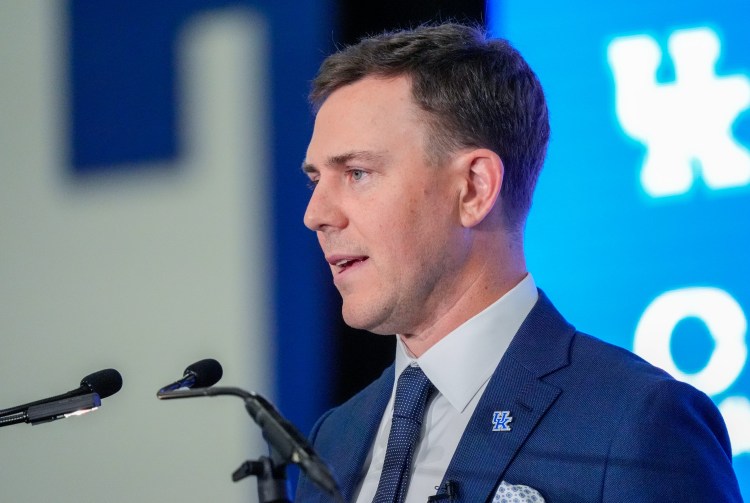
The landscape of college athletics has changed dramatically over the last decade, and financial support from fans, boosters, and alumni has become more important than ever. For powerhouse programs competing in the Southeastern Conference, athletic donations often serve as the fuel that keeps facilities modern, recruiting competitive, and championship ambitions alive. That is why recent reports placing the Kentucky Wildcats near the bottom of the SEC in athletic donations have sparked concern and conversation throughout Big Blue Nation.
For a program with one of the richest traditions in college basketball history and a passionate national fanbase, many supporters expected Kentucky to rank much higher financially among its conference rivals. Instead, the numbers suggest that while the Wildcats remain elite on the court in several sports, the financial backing behind the scenes may not be keeping pace with the rapidly escalating standards of the SEC.
The SEC has evolved into far more than just a football conference. Schools across the league are investing heavily in basketball, baseball, softball, gymnastics, and Olympic sports. Massive donor campaigns have become common, with universities raising hundreds of millions of dollars for stadium renovations, NIL initiatives, player development centers, and recruiting operations. Programs such as Texas Longhorns, Alabama Crimson Tide, and Georgia Bulldogs continue to attract enormous financial support from wealthy alumni and booster collectives.
Against that backdrop, Kentucky’s lower standing in athletic donations has become a surprising development. The Wildcats are one of the most recognizable brands in college basketball, with decades of success, multiple national championships, and a fanbase that stretches far beyond the state of Kentucky. Under legendary coaches like Adolph Rupp and John Calipari, the program built a reputation as one of the sport’s blue-blood giants.
Now, under head coach Mark Pope, the Wildcats are attempting to build a new era of success while navigating an increasingly competitive financial environment. The challenge is that modern college sports are no longer driven by tradition alone. Money plays a major role in everything from NIL opportunities to recruiting resources and facility upgrades.
Many analysts believe Kentucky’s donation ranking reflects a broader issue facing the university’s athletic department. While the Wildcats enjoy tremendous fan support, a large portion of that passion comes from everyday supporters rather than ultra-wealthy donors capable of making transformative contributions. Other SEC schools have aggressively cultivated billionaire boosters and massive donor networks, creating financial advantages that can influence every aspect of athletic competition.
The rise of NIL has also changed the equation significantly. Athletes today are evaluating schools not only based on coaching and tradition, but also on earning potential, facilities, and long-term career opportunities. Universities with stronger donor support often have more robust NIL collectives capable of attracting elite talent. In the SEC, where recruiting battles are fierce, falling behind financially can quickly translate into disadvantages on the field and court.
For Kentucky basketball specifically, expectations remain sky-high every season. Big Blue Nation expects Final Four appearances, SEC titles, and national championship contention. However, maintaining that level of competitiveness requires substantial investment. Facilities must stay modern, support staffs must expand, and NIL opportunities must remain attractive enough to compete with rivals.
The concern among some fans is that Kentucky’s financial position could eventually impact recruiting momentum. Top prospects increasingly compare schools based on total athletic investment, and SEC rivals are making it clear they are willing to spend heavily to gain an edge. Programs once viewed as secondary basketball schools are now pouring resources into the sport, narrowing the gap between themselves and traditional powers like Kentucky.
Still, many inside the program believe the Wildcats remain in a strong position despite the donation rankings. Kentucky’s brand recognition, television exposure, and passionate fan culture continue to make the school one of the most appealing destinations in college athletics. Few programs can match the atmosphere of Rupp Arena, where generations of fans have created one of basketball’s most iconic environments.
There is also optimism that the recent attention surrounding donation figures could motivate supporters to become more involved financially. Athletic departments across the country have increasingly launched campaigns encouraging fans to contribute at every level, emphasizing that even smaller donations can collectively make a major impact. Kentucky administrators understand that maintaining SEC competitiveness will likely require stronger engagement from alumni and boosters moving forward.
Football also plays a significant role in the discussion. SEC athletic departments often generate enormous revenue through football success, and donor activity tends to rise alongside winning seasons. Under head coach Mark Stoops, Kentucky football has made meaningful progress over the last decade, reaching bowl games consistently and improving its national profile. However, competing financially with perennial football giants such as Alabama, Georgia, and Texas remains a difficult challenge.
The timing of these rankings is especially important because college athletics is entering a transformative period. Conference realignment, NIL regulations, and revenue-sharing discussions are reshaping the future of the NCAA. Schools that adapt quickly and secure strong financial foundations may gain significant long-term advantages. Those that struggle to keep pace financially could face increasingly difficult challenges maintaining elite status.
For Kentucky, the situation may ultimately become a rallying point rather than a crisis. Big Blue Nation has always prided itself on loyalty and passion, and many fans view the Wildcats as more than just a sports program. Kentucky basketball, in particular, represents tradition, identity, and pride for countless supporters across the state and beyond.
As the Wildcats prepare for another highly anticipated season under Mark Pope, conversations surrounding athletic donations are likely to continue. Fans will closely watch whether the university launches new fundraising initiatives or expands NIL partnerships to strengthen its competitive standing within the SEC.
What remains undeniable is that Kentucky still possesses one of the most powerful brands in college sports. The Wildcats continue to attract national attention, elite recruits, and enormous fan engagement. But in today’s college athletics world, tradition alone may not guarantee dominance.
The SEC has become an arms race financially, and every program is searching for ways to gain an edge. Kentucky’s placement near the bottom of the conference in athletic contributions has highlighted an uncomfortable reality: even legendary programs must continue evolving to remain competitive.
For Big Blue Nation, the message is clear. Passion and history still matter, but in modern college sports, financial support has become just as important as championships and banners hanging from the rafters.
Leave a Reply